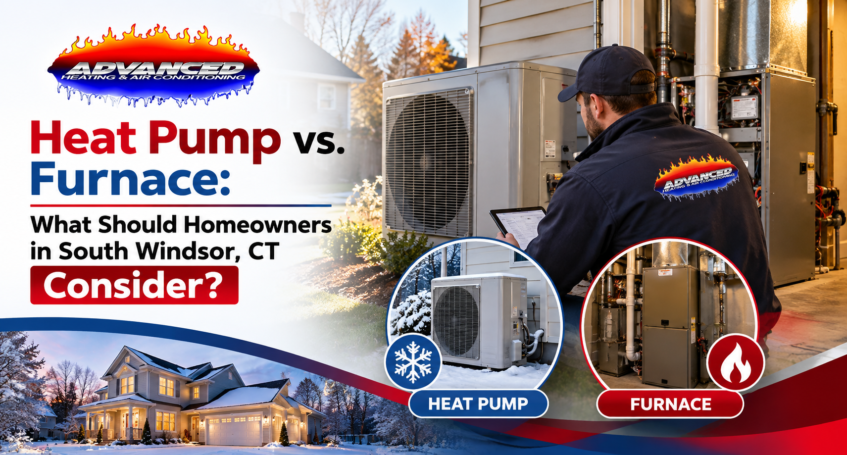
Heat Pump vs. Furnace: What Should Homeowners in South Windsor, CT Consider?
Choosing a heating system is a major decision for homeowners in South Windsor, CT. When an older heating system begins requiring frequent repairs, many homeowners start comparing traditional furnaces with newer heat pump systems.
Both can provide comfortable indoor temperatures, but they operate differently and have different installation and maintenance considerations. Understanding how each system works can help homeowners have a more informed conversation with an HVAC professional before choosing a replacement.
How Does a Furnace Work?
A furnace generates heat and distributes it throughout the home. Depending on the equipment, a furnace may use natural gas, oil, or electricity.
In a forced-air system, the furnace heats air and a blower moves that air through ductwork into different rooms. When the thermostat reaches the desired temperature, the system cycles off until more heat is needed.
Furnaces are a familiar heating option for many Connecticut homes, particularly properties that already have compatible ductwork.
How Does a Heat Pump Work?
A heat pump works differently from a furnace. Instead of generating heat in the same way, it transfers heat from one location to another.
During heating mode, an air-source heat pump extracts available heat from outdoor air and transfers it inside. During warmer weather, the process can be reversed to provide cooling.
One important difference is that a heat pump can provide both heating and cooling, while a furnace is primarily used for heating and normally requires a separate cooling system.
How Do They Perform During Connecticut Winters?
South Windsor homeowners need to consider winter performance because Connecticut can experience extended periods of cold weather.
Modern heat pumps are designed to operate in cold conditions, although performance can vary depending on the equipment, outdoor temperature, system design, and installation.
A furnace produces heat directly, which gives it a different operating process. Neither system should be selected based solely on the general reputation of the technology. The home’s heating requirements and the specific equipment should be evaluated.
Consider Your Existing HVAC System
Your current setup can influence the decision.
If your home already has functional ductwork, a compatible furnace or ducted heat pump may be able to use the existing distribution system. However, the ductwork should still be evaluated to determine whether it is appropriately sized and in suitable condition.
Homes without traditional ductwork may have other choices. Ductless heat pump systems can provide heating and cooling to individual rooms or zones without requiring a conventional duct network.
This can be useful for additions, older homes, or areas where extending ductwork would be difficult.
Look at Year-Round Comfort
A heat pump can provide both heating and cooling from one system. This can be an important consideration for homeowners replacing both an aging furnace and an air conditioner.
A furnace only handles the heating side of the home’s comfort system. If summer cooling is needed, a separate air conditioning system is generally required.
For a homeowner planning a complete HVAC upgrade, considering the entire year rather than only the winter season can make the comparison more useful.
Energy Efficiency Matters
Energy use is another factor worth considering, but homeowners should avoid assuming that one system will automatically have lower operating costs in every home.
Heating expenses depend on several factors, including equipment efficiency, system size, insulation, air leakage, thermostat settings, outdoor temperatures, and how frequently the system operates.
The home’s existing condition can therefore be just as important as the equipment itself.
Before choosing a system, homeowners should ask about expected energy use and how the proposed equipment is sized for their specific property.
Installation Is Just as Important as Equipment
Even a high-quality HVAC system needs to be properly installed.
A professional evaluation may consider the home’s square footage, insulation, ductwork, electrical requirements, existing heating system, available space, and overall heating and cooling needs.
Equipment that is too large or too small for the property may not provide the expected comfort or efficiency.
Homeowners considering their options can learn more about heating and cooling services from Advanced Heating and Cooling.
What About Maintenance?
Both furnaces and heat pumps require regular maintenance.
A furnace may need inspection of its burner, blower, filter, controls, and other components. Heat pumps also have components that need inspection, cleaning, and adjustment.
Regular service can help identify developing issues and keep the system operating as intended.
Maintenance is particularly important before periods of heavy heating or cooling demand. Scheduling service before the system is needed most can also give homeowners an opportunity to address smaller problems before they become unexpected breakdowns.
Consider the Age of Your Current System
The condition of your existing equipment should be part of the decision.
If a furnace is relatively new and working properly, replacing it may not be necessary simply because heat pump technology is available. However, if the furnace is older, inefficient, or experiencing repeated problems, replacement may become more practical.
Homeowners should compare the cost of continued repairs with the expected benefits and installation requirements of a new system.
Think About Your Home’s Long-Term Needs
A heating system is a long-term investment, so consider more than the initial installation price.
Think about whether you want one system for both heating and cooling, whether your home has suitable ductwork, what maintenance will be required, and how the system fits your future plans for the property.
A professional assessment can help identify which options are compatible with your home’s structure and existing HVAC equipment.
Heat Pump or Furnace: What Should You Choose?
There is no universal answer for every South Windsor home.
A furnace may be appropriate for a homeowner who prefers a conventional heating system or already has compatible equipment and ductwork. A heat pump may be worth considering for homeowners who want a system capable of providing both heating and cooling.
The decision should be based on the home’s layout, existing HVAC equipment, insulation, energy needs, installation requirements, budget, and comfort preferences.
Homeowners in the area can also review local HVAC options through a HVAC company near Tolland when comparing heating-system solutions.
Make the Decision Based on Your Home
Choosing between a heat pump and furnace is not simply about deciding which technology is newer or more familiar. Both systems have different characteristics, and the right choice depends on the specific home.
Before replacing your heating system, consider its current condition, your home’s existing ductwork, year-round comfort needs, maintenance requirements, energy use, and installation requirements.
Taking time to evaluate these factors can help South Windsor homeowners choose a heating solution that fits their property and provides dependable comfort through Connecticut’s changing seasons.